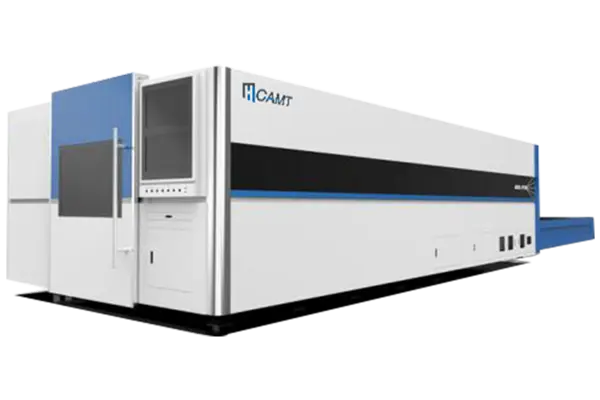
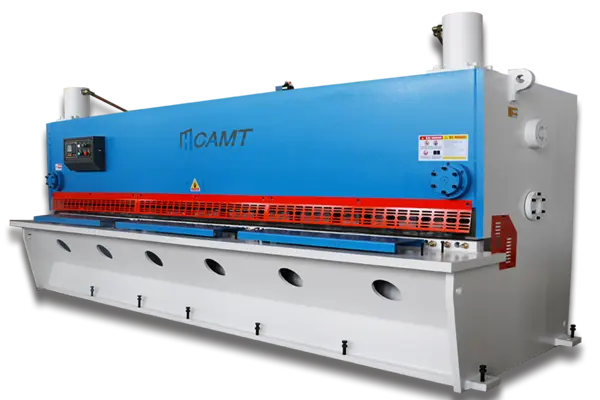
Laser cutting for agricultural machinery parts offers manufacturers a flexible way to process complex metal profiles, improve dimensional consistency, and streamline production. But choosing the right fiber laser cutting machine requires more than comparing laser power or maximum cutting thickness.
Manufacturers should evaluate material characteristics, component geometry, cutting accuracy, production volume, downstream fabrication processes, and the total cost of ownership.
This guide explains the key considerations when using fiber laser cutting machines for agricultural equipment manufacturing.

Farm equipment parts and materials vary, impacting edge and performance requirements
Farm equipment is a mixed part family, not one gauge. Ask what each part needs from the cut edge before it reaches the next operation.
| Machine family | Representative parts | Common materials | Cutting difficulty |
|---|---|---|---|
| Tractors, cabs | Covers, cab panels, chassis plates, hydraulic brackets | Mild steel, HSLA | Hole position to one datum; thin-panel distortion |
| Combine harvesters | Guards, access doors, grain panels, conveyor parts | Mild steel, stainless | Batch repeatability; coated edges outdoors |
| Seeders, planters | Hopper panels, metering plates, row-unit brackets | Mild steel, HSLA, hollow sections | Dense hole patterns; interfaces after welding |
| Tillage, soil tools | Plow supports, cultivator brackets, blade blanks | Abrasion-resistant grades | Laser makes a blank; hardness comes later |
S235/S355 (EN 10025) and A36 (ASTM) are often grouped together, as are branded abrasion-resistant plate and NM-series grades. They are not interchangeable: name the governing standard on the order and keep the mill certificate with the first-off coupon. Aluminum appears in lightweight panels and stainless in fertilizer-handling parts; aluminum’s reflectivity is a machine-rating question for the quotation.
Higher strength changes forming and welding behavior, and abrasion resistance comes from the material system, not the beam. A clean edge does not guarantee performance under cyclic loading; design, material certification, welding procedures and fatigue testing remain essential. Check the producer’s thermal-cutting guidance before setting parameters on abrasion-resistant plate.
Start With the Field Failure, Then Name the Cut Attribute
| Part class | Field failure | Governing cut attribute | RFQ / first-off clause |
|---|---|---|---|
| Welded brackets, hitch plates | Forced fit-up, joint fatigue | Hole position to one datum, square edges, weld-land oxide | One datum; signed sample; weld trial, same gas route |
| Painted guards, cab panels | Blistering, under-film corrosion | Edge oxide, dross, burr, coating-approved surface | Approved panel plus adhesion test; no "clean edge" claim |
| Tube frames, booms | Frame out of square, joint misfit | End profile, notch, tab-and-slot fit | Full-length assembly trial before welding |
| Wear and blade blanks | Rapid wear, chipping in soil | Blank geometry only | State on drawing: laser produces a blank |
| Sensor brackets, battery trays | Interfaces drift across a batch | Small-hole geometry, positional repeatability | Gauge first and last part; record program revision |
| Service and legacy parts | Harvester waits on one part | Revision control, recipe recall | Require released revision and parent material |
A drawing that says only “clean cut edge” gives an inspector nothing to measure. ISO 9013 applies where invoked and does not cover burr, dross, oxide color or dimensions; those need their own clauses. If a bidder never asks about the failure column, the quotation is for a device, not a controlled process. Kerf, heat-affected zone and assist gas are defined in our laser cutting terms glossary.
Hole Position, Fit-Up and the Tolerance Chain Into Welding

Specify dimensional accuracy only where it changes assembly. A mounting plate with holes for a hydraulic valve or gearbox is the common case: positional error slows installation and a stack of small errors pushes a welded frame out of square.
CAMT machines carry published positioning accuracy of ±0.03 mm and repeatability of ±0.02 mm on listed configurations. These are machine specifications, not guaranteed finished-part tolerances; results depend on material, thickness, parameters, workpiece condition, calibration and inspection method. Verify current figures on the product page before putting them on a drawing, and inspect sample parts before approving production.
A 2015 account of an Iowa farm-equipment builder quotes its operations manager saying the real benefit of a sheet laser is accuracy: better fit-up improves welding and the integrity of the finished component, while tab-and-slot geometry removes some fixtures entirely (The FABRICATOR). The practical check is whether a frame assembles without prying or grinding, and whether the last part matches the first.
When it does not, check the datum, the released program revision, then machine state: nozzle, protective lens, height following and gas supply. Our technical support team works on that parameter and diagnostic layer. A uniform offset can be compensated; a tapered cut cannot.
Incoming Material and Storage Decide Whether the Recipe Survives
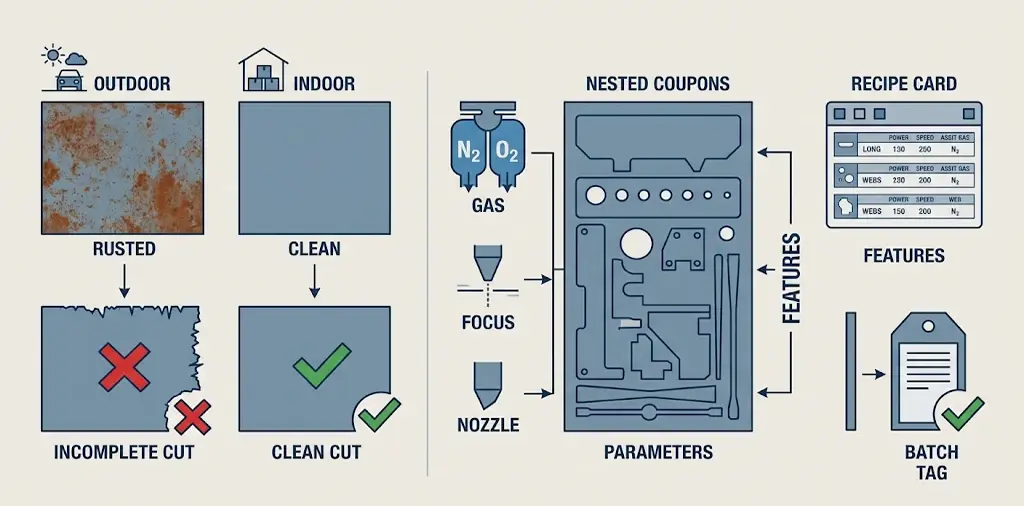
The same 2003 account says the plant stored steel outdoors, and switching to lasers changed its raw-material handling: rust spots produced poor edges or incomplete cuts and the part was scrapped. That is a material-input problem wearing a machine-problem costume. Do not rely entirely on standard demonstration samples.
Write the incoming variables into the recipe: grade and heat, thickness, surface state, flatness, coating, rolling direction where forming needs it, and storage. When any changes, run single-variable cuts on adjacent coupons from the same parent sheet — never re-cut an already-cut plate — covering long edges, small holes, sharp corners and narrow webs. Log gas route, focus, nozzle and lens condition, program revision and measured result. Changing assist gas re-qualifies focus, piercing, nozzle condition and speed.
Habits matter as much as hardware: how a batch is identified, how a parameter change is authorized, how a superseded program is retired. Operator and programmer training should cover that handover, including the focus sign convention on your controller — controllers differ, and the machine manual governs. A library that cannot recall a one-off spare part is a library rebuilt during harvest.
Choosing the Configuration Around the Part Family
Choosing power from a maximum-thickness number is the common mistake. One machine rarely cuts one gauge: thin covers, mounting plates and heavy structural members share a shift. A shop running mostly 2–6 mm brackets has a different case from one releasing 12–20 mm plate — those describe a mix, not a power band. Higher power does not automatically produce better results on every abrasion-resistant steel, and thickness alone is not a parameter. Group parts into thin panels, heavy plate, tube members and wear blanks with a first-off coupon each; power screening belongs in our fiber laser cutting thickness chart.
Structure follows the ratio of one-off work to released batches. An open-type fiber laser cutter suits custom agricultural work: convenient loading, easier maintenance, simpler integration. An enclosed exchange-table cutter suits continuous batches: better fume and spark containment, and the next sheet prepared while the current one cuts. Neither is universally better; extraction and floor space matter too. Compare working areas and power options across the fiber laser cutting machine range, and confirm the current model-sheet revision before writing any configuration into an RFQ.
Sheet, Tube or Both
Follow the part family and the work-in-process burden, not the price of two machines.
| If most of the backlog is | Evaluate first | Confirm on your parts |
|---|---|---|
| Flat brackets, guards, hopper panels, plates | Sheet laser | Largest sheet, small holes, edge acceptance |
| Frames, booms, notched or tab-and-slot joints | Tube laser | End profiles, joint fit, full-length assembly trial |
| Both, in sustained volume | Two machines or combined | Section range, lengths, bevel, floor space |
The sheet metal versus tube laser comparison develops the format decision. Where frames, booms and notched joints dominate, a dedicated pipe laser cutting machine is the configuration to evaluate, not an accessory ordered later. Published configurations list tube diameters of φ15–φ220 mm and lengths of 6,000–8,000 mm, with bevel cutting and automatic loading on some builds; confirm the current revision instead of treating these as a promise for every section. A combined machine is a third option, but the most economical solution is not the one with the most functions.
What the Machine Really Costs Over a Season
The goal is to reduce the total cost per acceptable finished part, not the purchase price.
| Cost factor | Evaluate | Agricultural-equipment trap |
|---|---|---|
| Initial investment | Price and configuration | Cheapest build lacks extraction or an exchange table |
| Energy | Real power demand | Idle time across short seasonal runs |
| Consumables | Nozzles, lenses, ceramics | Lens failure mid-harvest, no spare on site |
| Maintenance | Service intervals | Service planned for the busiest week |
| Labor | Loading, programming, inspection | First-off checks on every part-number changeover |
| Material waste | Nesting and scrap | High-strength plate scrapped after a batch change |
| Downtime | Support and spares | One missing part stops a harvester in the field |
| Capacity | Parts per shift, utilization | Annual average hides the week the plant cannot stop |
A lower purchase price can cost more once handling, rework, scrap and interruptions are counted; the cost structure is set out in our laser cutting machine price breakdown. Seasonal peaks are also the wrong time to discover the maintenance and upgrade plan was never written into the schedule, or that consumables and training were left off the order.
Safety and Compliance Belong in the Quotation
Guarding, high-pressure assist gas, reflective material and fume are safety questions, and belong in writing before the order. In the United States, OSHA 1910.101 covers visual inspection of compressed gas cylinders, in-plant handling and storage per Compressed Gas Association Pamphlet P-1, and pressure-relief devices. ISO 11553-1 and the ANSI Z136 family define the laser-safety framework; we cite them as framework, not a compliance certificate.
Three questions belong in the RFQ: is the machine rated for the reflective materials you intend to cut — where the aluminum question lands; what back-reflection protection and alarm behavior is fitted; and what optic grade and inspection interval apply. Oxygen-service cleanliness, high-pressure lines, storage, ventilation, and fume and fire behavior for galvanized or coated sheet are settled with the supplier and your site EHS. We do not assert compliance or suitability on your behalf; that confirmation has to come from the equipment supplier in writing. No schedule pressure justifies defeating an interlock.
The RFQ and Acceptance Package
Send the same worksheet to every bidder. It turns a machine quotation into a process quotation.
| Evaluation item | Supplied by | Verified by | Supplier answers in writing |
|---|---|---|---|
| Part classes and field-failure attribute | Buyer engineering | Drawing review | Which part classes the build covers |
| Grade, heat, thickness, surface, storage | Buyer + mill documents | First-off coupon record | What changes when a batch or grade changes |
| Peak-window part numbers, changeovers | Buyer production | Trial nest, busiest shift | Throughput at the buyer's mix, not a demo |
| Sheet/tube envelope, clamping, nesting | Dated supplier model sheet | Largest and smallest released part | Current revision, largest section, bevel capability |
| Power and gas circuit: lines, valves, nozzles | Supplier, same order | Point-of-use spec and test | What is included, who re-verifies |
| Positioning accuracy and repeatability | Supplier | Buyer's first-off inspection | Machine specs or finished-part tolerances |
| Edge acceptance: coating, weld, dross, burr | Buyer + coating/weld suppliers | Signed sample, approved panel, adhesion test | Which edge condition per grade |
| Program library, revision control, backup | Supplier and buyer | Recall a revision, re-cut a service part | How superseded programs are retired |
| Guarding, gas, fume and fire boundary | Supplier and site EHS | Written confirmation | No compliance assertion made for the buyer |
Test with five representative parts: a multi-hole mounting plate, a contoured structural bracket, a slotted protective panel, a thicker plate component, and a full-length tube member if tube work is in scope. Record cutting conditions, hole and contour dimensions, edge quality, distortion, material use and batch repeatability.
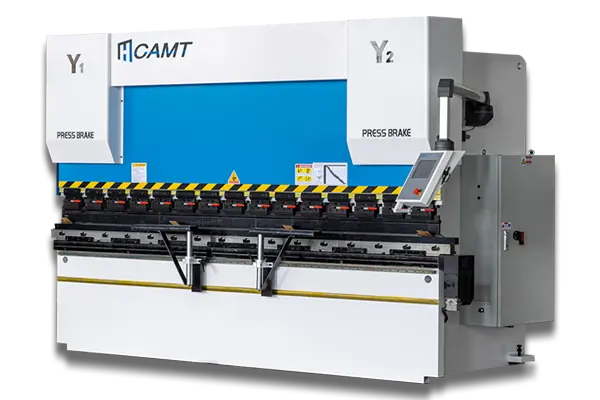
Cutting is only the first operation. Where a part is formed, our press brake buyer’s guide uses the same language of part classes and acceptance items. To work through this worksheet against your part list and seasonal window, bring the drawings to our contact page and we will go through it with you.
Conclusion
Laser cutting for agricultural machinery parts is a decision about part attributes, the peak window and the written acceptance package — not about the highest power rating. Start from the field failure, name the cut attribute that governs it, and make the supplier answer for it on your own parts in your busiest week. The right configuration is the one that still releases acceptable parts when the plant cannot stop.