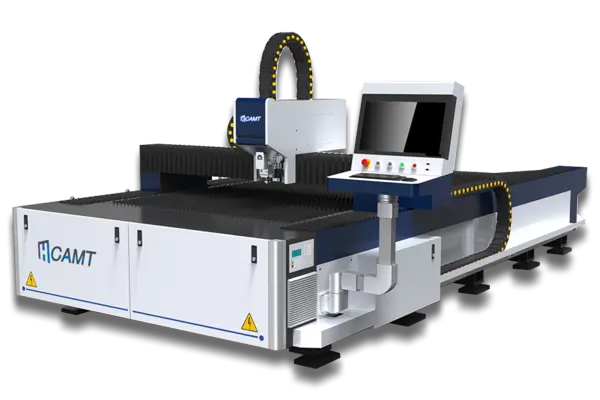
Choosing between fiber laser, plasma, and flame cutting is not simply a matter of comparing machine prices. The right cutting technology affects your production speed, cut quality, material utilization, labor costs, and ability to handle future orders. A machine that performs well on thin stainless steel may become inefficient when cutting thick carbon steel, while a low-cost flame cutting system may struggle to meet the accuracy requirements of modern fabrication work.
So, which technology should you choose?
Fiber laser cutting is generally the best choice for shops prioritizing precision, high-speed sheet metal processing, and material versatility. Plasma cutting offers a practical balance of investment cost, productivity, and medium-to-heavy plate capability. Flame cutting remains a cost-effective solution for very thick carbon steel where precision and cutting speed are less critical.
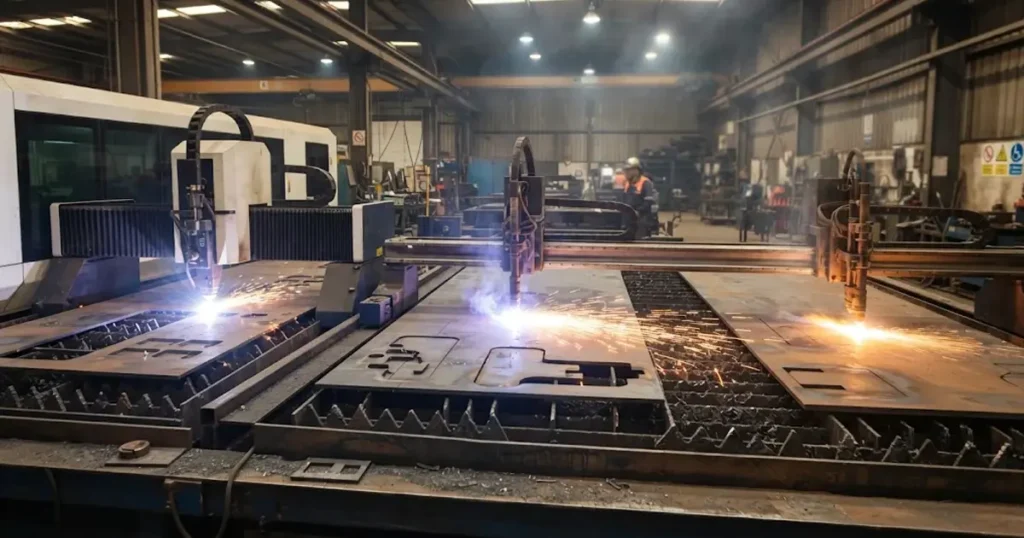
What the three processes actually do
| Fiber laser | Plasma | Oxyfuel (flame) | |
|---|---|---|---|
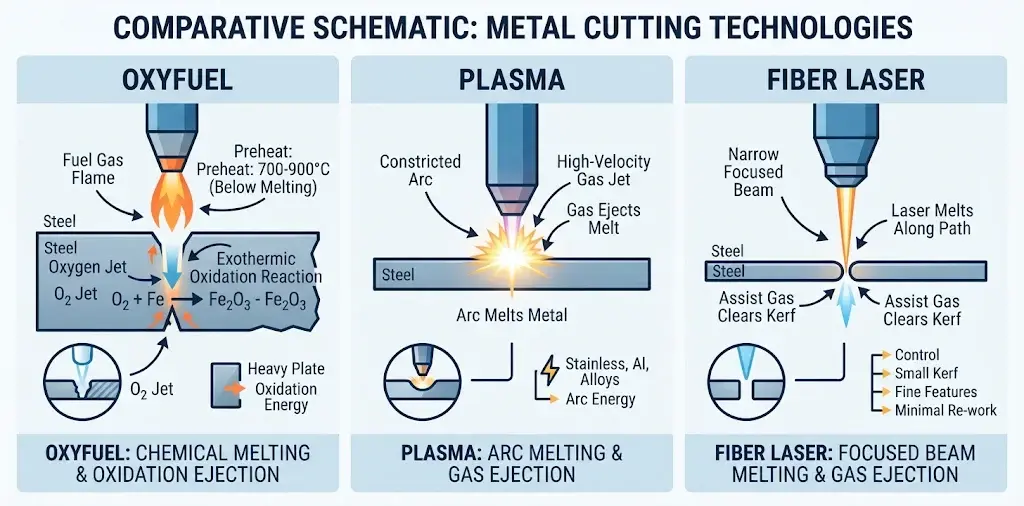
| Cutting principle | Focused beam melts a narrow path; assist gas clears the kerf | Constricted arc melts metal; high-velocity gas ejects the melt | Oxygen reacts with hot iron; the oxide is blown out of the kerf |
| Materials it can separate | Carbon steel, stainless, aluminium, other alloys subject to configuration | Electrically conductive metals | Carbon and some low-alloy steels |
| Usual thickness band | Thin sheet to medium plate | Medium to heavy plate | Heavy to very heavy carbon-steel plate |
| Edge character | Narrow, square on suitable thickness; fine features hold their shape | Top-edge rounding and a characteristic bevel | Wide kerf, oxide and slag, larger heat-affected zone |
| Kerf and heat input | Smallest | Wider | Widest |
| Tolerance of plate condition | Prefers clean, consistent stock | Tolerates rust, paint and mill scale | Tolerant |
| Capital outlay | Highest | Moderate | Lowest |
| Automation potential | High, including loading and nesting integration | Good | Good, including multiple torches |
| Secondary work | Often minimal | Application-dependent | Usually more extensive |
These are general comparisons, not guaranteed machine specifications. Actual capacity, edge quality, tolerances and running cost depend on configuration, material grade, thickness, cutting parameters and operator experience. The table answers what each process is. It does not answer which one to buy — that begins with the three gates in section 2.
Oxyfuel cutting does not melt its way through steel. A fuel-gas flame brings the steel to its ignition temperature — TWI puts this at 700–900 °C for steel, well below its melting point — and a jet of pure oxygen then triggers a vigorous exothermic reaction with the iron. The oxygen jet blows the resulting iron oxide out of the kerf. The flame supplies the starting heat; the oxidation supplies most of the cutting energy, which is why the process scales to very heavy plate without a proportional increase in power input.
Plasma works the other way round. A constricted electric arc melts the metal and a high-velocity gas jet ejects the melt. TWI states the distinction plainly: plasma melts the metal with the arc, whereas in oxyfuel the oxygen oxidises the metal and the heat of that exothermic reaction does the melting. Because melting does not depend on the metal forming a low-melting-point oxide, plasma cuts stainless, aluminium, cast iron and other alloys that oxyfuel cannot.
A fiber laser melts along a very narrow, focused path and clears the kerf with an assist gas. Its advantage is not raw heat but control: a small kerf, fine features, and hole geometry that downstream assembly can use without rework. That precision comes with tighter demands on plate condition, nozzle standoff, optics and the motion system.
Three gates instead of one thickness number
Published comparisons give each process a band — thin-to-medium, medium-to-heavy, heavy-to-extreme — and then add that there is no universal boundary, because operating ranges overlap and a high-definition plasma system or a high-power laser moves the line. Both statements are true and neither is actionable. A band describes what a machine can separate, not what your next operation will accept or what the finished part costs. Because the three mechanisms are different, those boundaries are discontinuous rather than gradual. Replace the single band with three gates a part has to clear.

| Gate | The question | Fiber laser | Plasma | Oxyfuel |
|---|---|---|---|---|
| Capable | Will it separate the material at all? | Limited by power, assist gas and reflectivity; configuration-dependent | Broad range on any conductive metal | Carbon and low-alloy steel only; thickness ceiling very high |
| Acceptable | Will the edge pass the next operation without dressing? | Narrow kerf, small features, square edge on suitable thickness | Top-edge rounding and bevel; hole geometry needs review | Wide kerf, widest heat-affected zone, oxide and slag to remove |
| Economic | Is the finished-part cost defensible at my volume? | Lowest secondary work, highest capital and utilisation requirement | Low capital, moderate consumables, finishing labour varies | Lowest capital; slow, and preheat plus finishing dominate |
A part that clears the first gate but fails the second is the most expensive kind of work in a fab shop: technically cut, commercially useless until someone grinds it. A part that clears both but fails the third is the reason a machine sits idle while the work goes out to a service centre.
This is also where the phrase “maximum cutting thickness” misleads. A published ceiling describes a single successful cut under controlled conditions. It says nothing about piercing time, edge squareness on a long profile, dross on a hot-rolled surface, or how many parts per shift come off the table ready for welding. Ask a supplier for a production band on your material with your gas and your acceptance criteria, not a headline figure. Section 5 shows you how to work out which band is worth paying for.
Where chemistry, not power, decides
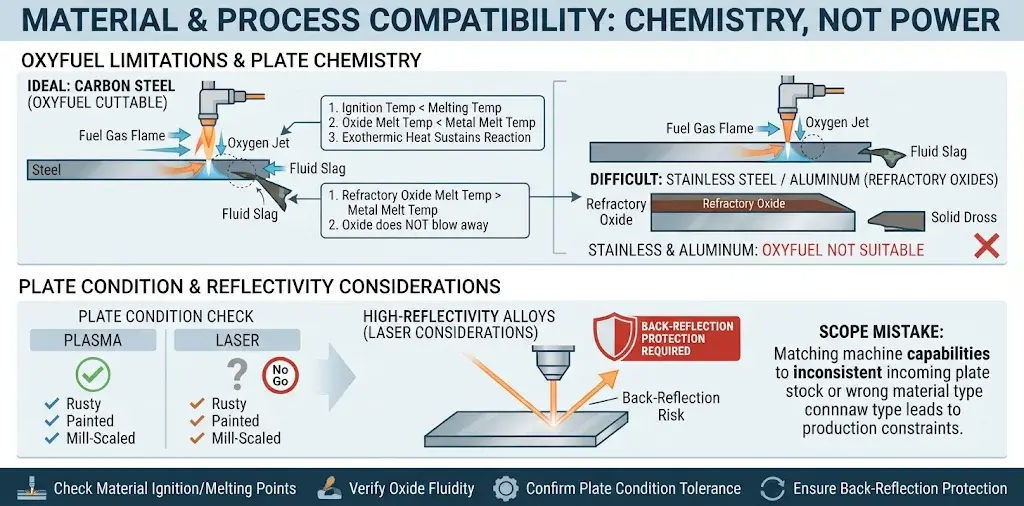
If your order book contains stainless steel or aluminium, part of this decision is already made for you.
TWI lists four basic requirements for oxyfuel cutting: the material’s ignition temperature must be below its melting point; the oxide must melt at a lower temperature than the surrounding metal so the oxygen jet can blow it away; the oxidation reaction must release enough heat to sustain ignition; and the reaction should produce as little gas as possible so the cutting oxygen is not diluted. Stainless steel, cast iron and non-ferrous metals form refractory oxides — the oxide melts at a higher temperature than the metal — so powder injection is required to form a fluid slag. In a normal production shop that is not a workaround; it is a different process. Shops doing stainless steel fabrication or aluminium fabrication are therefore already outside oxyfuel’s reach, regardless of how much heat is available.The plate condition row in section 1 deserves a second look here. A plasma table will tolerate rusty, painted or mill-scaled plate that a laser would struggle with, and a laser’s narrow kerf and tight nesting are worth little if incoming stock is inconsistent. Shops that buy a laser and then discover their material supply is the constraint have not made a technology mistake; they have made a scope mistake. Before comparing machines, compare the plate you actually receive. For high-reflectivity alloys, get written confirmation from the equipment supplier about back-reflection protection and the exact alloys you intend to run — that is a configuration question, not a power question, and we do not assert compliance on anyone’s behalf.
Edge quality is a downstream labour cost
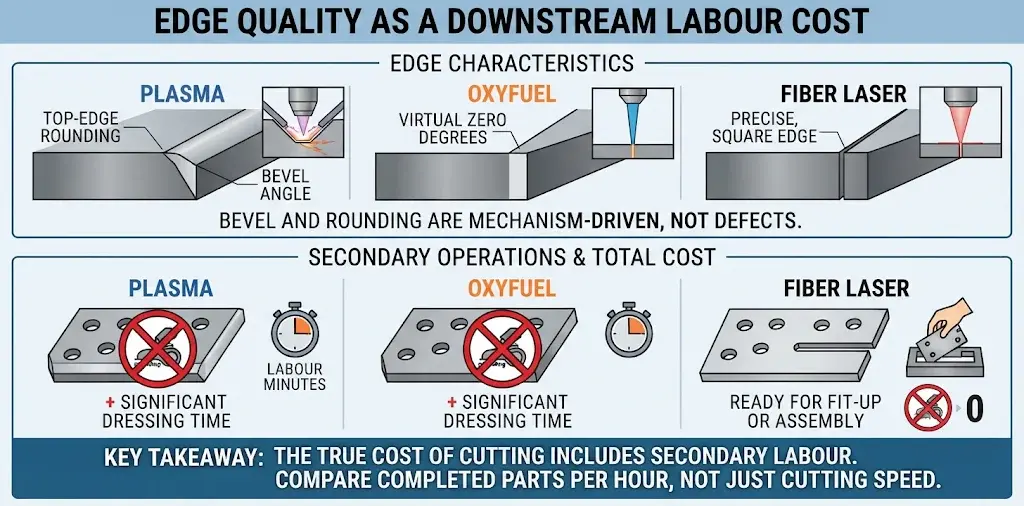
“Better edge” is usually discussed as an aesthetic. In a job shop it is a labour line. Electrical enclosures need accurate mounting holes and narrow slots; welded assemblies need fit-up that does not vary from part to part; machined features need a predictable starting surface. Every one of those requirements turns an edge characteristic into minutes of drilling, grinding, reaming or rework.
Plasma’s edge character follows from its mechanism. Because it cuts by melting, TWI notes a greater degree of melting toward the top of the plate, producing top-edge rounding, poor edge squareness or a bevel on the cut edge. That bevel is not a defect you can specify away by buying a more expensive torch; high-tolerance plasma narrows it, but the mechanism remains. A 2021 article by an applications manager at a cutting-system supplier makes the contrast from the other side: the oxyfuel edge is “very, very straight, virtually zero degrees,” while with plasma “there inevitably is some angle to the cut face”. Treat both as supplier-side observations about mechanism, not as tolerance guarantees for your parts.
The practical consequence: on a plate with bolt holes, slots, copes or a weld bevel, the time spent dressing after a plasma or flame cut belongs in the cutting cost. Interviewed for a 2025 article in The FABRICATOR, Steve Pugh of Steel Warehouse put the plate-shop priority in five words: “We don’t like secondary operations”. The same article describes the reason a heavy-plate operation invests in a high-power fiber laser as producing more high-quality cuts in less time using less floor space — not simply cutting faster.
When a comparison lists “part accuracy,” ask where that accuracy is measured: on the machine’s positioning axes, or on a part that has come off the table and been fitted to its mating component. Those are different numbers, and only the second one pays the wages. Always compare completed parts per hour rather than maximum cutting speed; a faster cut can still cost more per finished component once finishing labour is counted. Those minutes are exactly what section 5 asks you to write down.
Build a cutting ledger from your last twelve months
| Ledger row | What to record | What it decides |
|---|---|---|
| 1 | Thickness band + material for each job family | Which process is even eligible |
| 2 | Parts per year in that band | Whether the band deserves its own capacity |
| 3 | Cutting minutes per part, current process | Baseline machine load |
| 4 | Piercing / preheat minutes per part | Where oxyfuel and thick-plate laser lose time |
| 5 | Secondary minutes per part (grind, drill, ream, straighten) | The strongest signal for upgrading |
| 6 | Rework and scrap parts per year | Whether edge consistency is already costing you |
| 7 | Outsourced parts in that band and the invoice total | The benchmark any purchase must beat |
| 8 | Plate condition on receipt (clean / scaled / painted) | Whether a laser is realistic for that band |
| 9 | Downstream requirement (weld-ready, bolt-ready, cosmetic) | The acceptance gate, in writing |
| 10 | Nesting yield / offcut value | Part of the material cost, not overhead |
| 11 | Consumables and assist gas attributable to the band | The running cost that scales with hours |
| 12 | Hours the current table was actually in cycle | The denominator for every utilisation claim |
Row 11 is where the three cost structures differ in practice: a laser draws electricity, assist gas, protective lenses, nozzles and cutting-head maintenance; a plasma torch draws electrodes, nozzles, process gas or compressed air; an oxyfuel station draws oxygen, fuel gas, tips and preheat time. Keep capital and installation in the same columns — electrical service, extraction, chiller and gas supply work belong in the comparison, not in a separate overhead line.
Which process fits your kind of work?
| Typical work | Usual starting point | Keep or add | Ledger row that decides |
|---|---|---|---|
| Electrical cabinets, enclosures and precision sheet metal | Fiber laser | Keep plasma or outsource occasional heavy plate | 5 (secondary minutes) and 9 (downstream requirement) |
| General sheet-metal fabrication, mixed gauges | Fiber laser | Plasma for heavier and dirtier stock | 2 (parts per band) and 12 (in-cycle hours) |
| Structural steel and construction plate | Plasma | Oxyfuel for heavy sections; laser only if thin-sheet hours dominate | 8 (plate condition) and 9 (weld prep) |
| Shipbuilding and heavy-plate fabrication | Plasma or oxyfuel | Keep multi-torch oxyfuel for the thickest work | 4 (preheat) and 7 (outsourcing invoice) |
| Stainless steel and aluminium fabrication | Fiber laser or plasma | Retain oxyfuel for carbon-steel heavy work only | 1 (material eligibility) |
| High-volume, repeatable sheet production | Fiber laser with automation matched to loading time | Contracted backup capacity or a second machine | 3, 12 and the consolidation risk in section 6 |
Shops in the first and last rows also have a machine-format decision to make, which section 8 takes up. Everywhere else, the decision is whether one process can carry the band at an acceptable edge and a defensible cost — the three gates from section 2 applied to real numbers.
If the answer is a fiber laser, what should you specify?

A machine that is too small restricts future work; an oversized one raises capital and running cost without paid hours to fill it. Five questions need answering before a process decision is signed off. They are questions to put to a supplier, not a selection formula. Once the process is settled, how to choose a fiber laser cutting machine takes you from that answer to a specification.
What is your actual material and thickness mix? List the grades you run and record the minimum, average and maximum thickness for each. Do not let the thickest occasional job set the specification.
What power band does that mix call for? Laser power affects cutting speed, piercing, capability and cost together, but the right answer comes from cutting tests on your own material. Confirm the power range against the individual model spec sheet — figures on a category overview and those on a model page are not always the same, and the model sheet is the one that belongs in a purchase order.
What table format fits your sheet sizes? The bed should accommodate your standard formats while leaving room for loading and unloading. Common working areas exist, but confirm the exact envelope against the model spec sheet rather than a general list; a format that forces extra handling removes the productivity it was meant to add.
Open or enclosed? An open-type single-table fiber laser cutter suits flexible layouts, easy loading and varied custom work. A fully enclosed machine with automatic exchange tables suits continuous batch production where loading downtime and a contained fume and spark environment drive the decision. If the work involves round, square or rectangular tube and profile work with bevel joints, that points to a dedicated pipe and tube laser platform rather than a larger flatbed. Our fiber laser cutting machine range covers these three formats, so the format can be matched to how your shop loads work rather than the other way round.
What else determines long-term consistency? Ask for the laser source and output stability, cutting head and autofocus, CNC control and nesting compatibility, servo and transmission components, frame rigidity, cooling reliability, and the availability of service and spares. A supplier who answers only with machine dimensions has left the scope incomplete. A full power-by-thickness selection guide belongs in its own treatment; the five questions above are enough to turn a process decision into a specification. For high-reflectivity alloys such as brass or copper, get written confirmation of back-reflection protection and the exact grades — they are a configuration question, not a standard material claim.