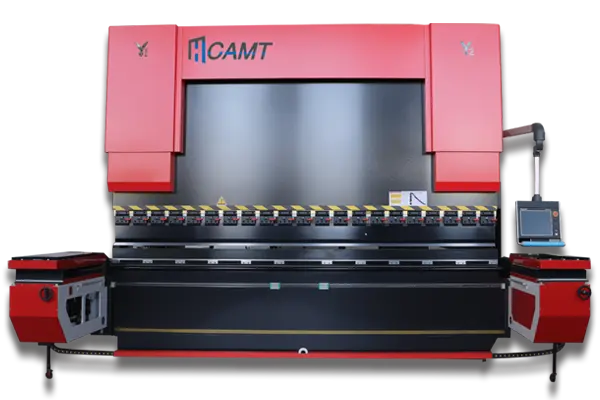
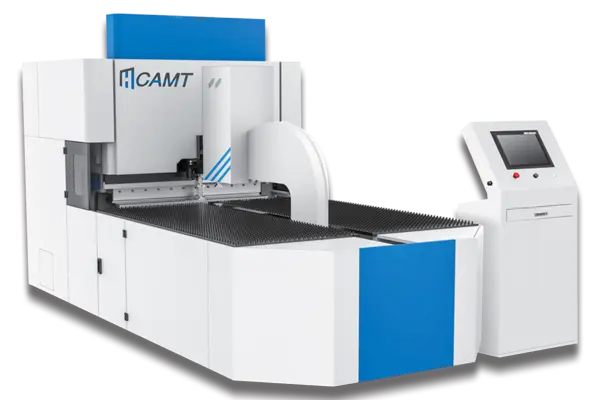
An automatic loading and unloading system addresses this problem by transferring raw sheets to the cutting machine and removing processed materials with minimal manual intervention. However, the additional equipment requires capital investment, floor space, maintenance, and proper production planning.
So, is automatic loading and unloading worth it?
- Usually yes: long runs of one grade, frequent sheet-change delays, two or three shifts, idle capacity downstream.
- Usually no: a few sheets a day, high-mix one-offs, no room for a tower, a full deburring or forming queue.
- Not decided by: laser power, brochure cycle times, or a payback figure quoted before anyone has seen your nest files.
What "Automatic Loading and Unloading" Actually Covers
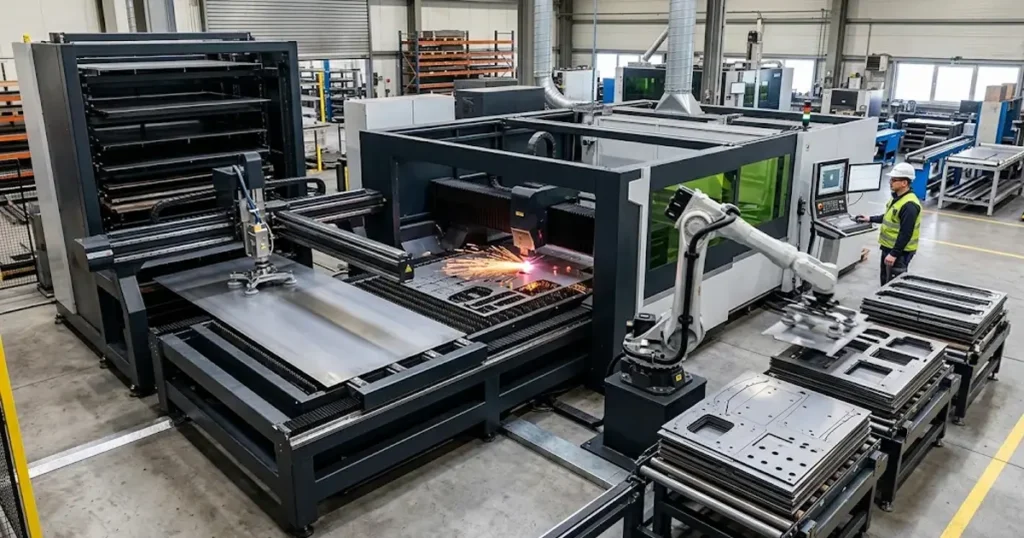
A single-sheet loader lifts one blank onto the table and removes the cut sheet. An exchange table lets an operator prepare the next sheet while the current one is being cut. A vertical storage tower holds many raw and cut pallets and retrieves them automatically. A 2008 survey of laser material-handling options in The FABRICATOR described the same tiers and made the point that still decides most projects: the mechanics are comparatively simple, while the software tracking inventory and interfacing with each machine is what makes or breaks an installation. That is a supplier-sourced description of architecture, not a current price or performance benchmark.
A typical cycle runs: prepare the stack, separate the top sheet, lift it onto the table, position and cut, remove the cut sheet or skeleton, then stage the next blank.
| Configuration | What it automates | Fits when | CAMT starting point |
|---|---|---|---|
| Manual or lifting aid | Operator loads and offloads | Few sheets a day, one-offs | ULF open-type single-table cutter |
| Exchange table | Table swap; prep overlaps cutting | Fast thin-sheet cycles | ULE enclosed exchange-table cutter |
| Loader and unloader | Raw sheet in, cut sheet out | Standard formats, two-sided delays | Compatibility in the written quotation |
| Tower with sorting | Storage, retrieval, handling | Multi-shift, many grades | Site layout and foundation plan |
An exchange table switches workbenches; it does not transfer sheets. A tower is not automatically better than a loader — it addresses material availability, not sheet exchange. See the fiber laser cutting machine range for the machine families; the model sheet for the configuration you order governs.
Measure the Four Clocks Before You Measure the Payback
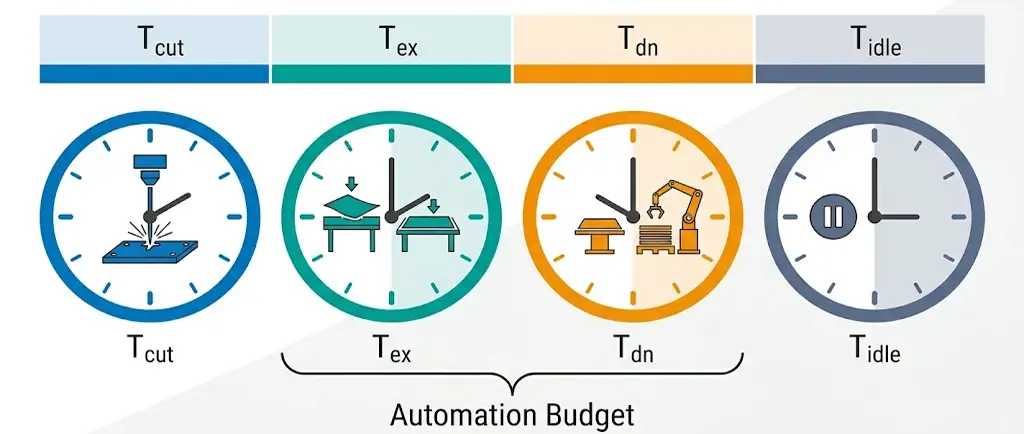
Split a shift into four buckets and time-stamp them for one representative week, not a good shift. T_cut is beam-on time on accepted nests. T_ex is sheet exchange: finding the next blank, lifting it on, removing the cut sheet and skeleton, clearing the slats. T_dn is denesting, sorting, stacking and kitting, whether on the table, at an offload bench or later in the shift. T_idle covers every other gap: programs, drawings, material tickets, inspection, cranes, operators or downstream space.
| Clock | Time-stamp | Can remove | Trap |
|---|---|---|---|
T_cut | Cut start/end per nest | Nothing | Beam-on minutes on scrapped nests |
T_ex | Load start to next load start | Part, via loader or shuttle | Display time only, not the forklift walk |
T_dn | Offload to parts accepted downstream | Part, via sorter | Booking denesting to the next shift |
T_idle | Reason-coded gaps | Only genuine "no sheet at the machine" | Averaging hides one job family's gaps |
Group readings by grade, thickness band and nest density. Averaging fast thin-sheet against slow thick-plate nests hides the split the decision depends on; a week without change orders is not a job shop. Write a reason code beside every long gap; that code tells you whether a machine purchase can fix it.
The judgement that follows is simple and rarely stated: the automation budget is T_ex + T_dn, not T_cut. Any payback argument starting from total cutting hours rather than from the handling minutes you can actually remove has already overstated the benefit.
The Conversion Gate: Recovered Minutes Are Not Shipped Parts
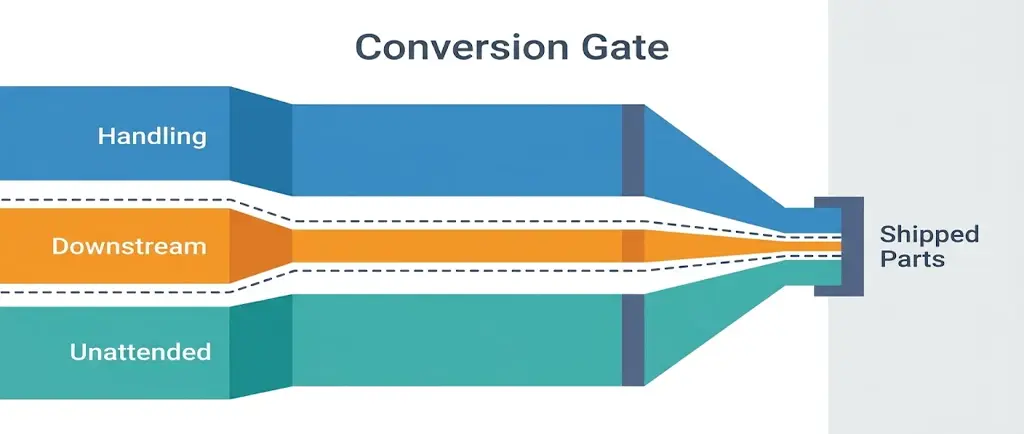
Three things cap what you can actually ship, and only the first has anything to do with the laser.
- Handling minutes recovered. How many minutes per shift does the quoted system really return, from one load start to the next on your nests? Take the supplier’s written figure under your material list and check it against your timestamps.
- Downstream capacity. How many extra accepted nests per shift can denesting, deburring, forming, welding and inspection clear? The slowest station sets the number. Otherwise recovered minutes become work in process, not shipped parts.
- Authorized unattended hours. How many minutes per shift will your site allow the cell to run with nobody present? If staff attend the whole shift, a labour saving is real only when those hours are demonstrably redeployed.
Take the smallest of the three. That is the gain your business case may use. Writing about integrated workcells in 2022, BLM GROUP’s Gunar Gossard put the reason plainly: every machine runs only as fast as the slowest machine.
Illustrative assumptions — replace with your own measurements. If a week shows 90 minutes per shift in sheet exchange and 45 in denesting, the addressable window is 135 minutes, not the whole shift. If the supplier’s written figure returns 70 of those minutes but the offload bench can clear only 40 minutes of extra work, the business case may use 40 — not 70, and not 135. Count that window once: either as redeployed labour hours or as extra machine hours, never both, unless your timestamps show they are different hours.
When the Answer Is No
Four situations repeatedly fail the test, and each is cheaper to fix without buying anything.
- Low volume. With a handful of sheets a day the loader stands idle and its cost spreads over very few parts. A lifting aid or exchange table usually removes the same interruption for less.
- High-mix one-off work. Many grades, hot jobs, mixed thicknesses and changing formats defeat a fixed pick point. A worker provides a versatility no robot matches. Write your part envelope into the order, or accept that some work stays manual.
- No room or no foundation. Towers commit floor position, static load, forklift route, remnant exit and access to a long-term plan. A system fitting the machine’s dimensions can still be wrong for the building.
- The bottleneck is downstream. If forming, welding or inspection is full, more cut parts raise inventory, not output.
Where the Bottleneck Moves After You Automate
Automation rarely deletes a constraint; it relocates it. This is also where the unloading half of the title earns its place. A tower-fed laser running unattended can leave a stack of cut sheets that somebody still has to break out in the morning. An offload system needing grippers can force small parts into grouped mini-nests, which stops them filling leftover gaps on a sheet. A 2023 Sheet Metal Industries article on automatic storage, supplied by BLM GROUP, describes the same problem from the material side: leftover stock from the previous batch has to be removed before the next can be presented, and space around the machine often becomes a temporary parking area that adds no value. Treat that as one vendor’s description of a mechanism, not independent performance data.
| Symptom | Clock | Changed | Moves to | Measure |
|---|---|---|---|---|
| Loader idle on a thick-plate nest | T_cut | Nothing | The cut | Beam-on minutes by thickness |
| Laser waits for parts from the skeleton | T_dn | Loading faster | Denesting | Parts accepted per hour |
| Night shift leaves cut sheets at dawn | T_dn | Unattended cutting | Morning sort | Sheets waiting at shift start |
| Small parts ganged into mini-nests | T_dn | Grouped offload | Material yield | Parts per sheet, before/after |
| Tower holds the wrong grade | T_idle | Storage added | Scheduling | Change-order insertion time |
| One suction fault stops the cell | T_idle | Series components | Recovery, spares | Time to clear a fault |
| Remnants fill the last cassette | T_ex | No empty slots | Remnant logistics | Free positions at cut end |
Robert Adelman, quoted in the same 2022 workcell discussion, drew the boundary clearly: a flat sheet sits on a pallet and presents few variables, while tube has to be unloaded piece by piece. That is why a tube platform such as the ULT tube laser cutting machine needs its own handling assessment rather than borrowing a sheet-cell calculation. The sheet cell’s math is about pallets; the tube cell’s math is about individual parts, orientation and the next bend.
The Cost Side a Quotation Leaves Out
Put the full annual cost on one side: equipment, site preparation and foundation, utilities and air, the software interface and licence, training, spare parts and consumables such as suction cups and sensors, maintenance, and occupied floor area. Add the cost of recovering from a handling fault, because in an automated cell a failed sensor stops cutting as well as handling.
Against that, place only the gain that passed the conversion gate: extra accepted nests downstream can clear, times contribution per nest, plus demonstrably redeployed labour hours. Then subtract the term most payback sheets omit — sheets lost per shift to nesting constraints and remnant policy, valued at sheet cost. If gripper clearance or mini-nests reduce the parts you get from a sheet, automation has raised material cost per part at the same time as it raised machine utilization. Measure accepted parts per sheet on your own nests, same grade and thickness, before and after a trial, and keep that as its own line.
A payback calculated on a nest you will never run again is not a payback.
Job Mix, Sheet Separation and Retrofitting
Write your part envelope into the order: smallest and largest part, thinnest and thickest sheet, grades and surface states, share of hot jobs, and remnant policy. Thick-plate and thin-sheet work belong in separate rows: a loader waiting twelve minutes for a nest cannot recover twelve minutes.
Sheet separation is where demonstrations go wrong. Thin stainless sticks together; filmed sheet scratches; flatness and oil change what a suction cup holds. Ask which method is used — vacuum, mechanical fingers, air blow, magnetic separation or a combination — and have the supplier run your thinnest and thickest sheets, including filmed stock, before you accept a cycle-time figure. A demonstration on one clean sheet of one grade measures the mechanism, not your mix.
The same order should settle the control handshake: machine status, table exchange, positioning, loading and unloading sequence, safety interlocks, alarm notification, and recovery after an interruption. If you are adding automation to a laser you already own, the mechanical interface, controller handshake, available floor, safeguarding boundary and the model sheet as built — including its revision — all need written confirmation, along with what happens to the original warranty and service scope.
What to Put in the Purchase Order
The cheapest time to settle all of this is before the order, when the supplier still has to answer in writing. Use a two-column worksheet: you measure, the supplier answers in writing against your nest files.
| You supply, measured on your floor | Supplier answers in writing |
|---|---|
| One week of four-clock timestamps, by grade | Cycle-time definition: load start to next load start |
| Sheet sizes, mass, grades, surface state | Rated envelope, separation method, exclusions |
| Smallest part, orientation at next operation | Smallest grippable part; mini-nest requirement |
| Current nests, microtabs, common-line cutting | Nesting constraints; filmed-material limits |
| Denesting, sorting and kit method | What offload delivers; what stays manual |
| Remnant policy; free pallet positions | Cassette positions for remnants and cut sheets |
| Downstream capacity; unattended hours | Alarm escalation; conditions that stop the cell |
| Fault-clearing authority; isolation boundary | Recovery procedure, reset authority, spares |
| ERP/MES interface; data ownership | Software scope, licence, interface ownership |
| Floor plan, foundation, aisles | Site drawing; witnessed acceptance run |
Make the acceptance run a contract item, not a demonstration: your material, nests and shift pattern; accepted parts per shift, parts per sheet, and time to clear one handling fault; with the observation window and pass rule in writing. A clean single-sheet cycle proves the mechanism worked once. It does not prove your mix works for a week.
Scope the software interface, remote log access, spare-parts list and maintenance plan in the same order. These are configuration items, not post-commissioning add-ons: software support covers program revisions and interface work, technical support covers log-based diagnosis, maintenance and upgrades covers planned upkeep of the handling system, and spare parts and consumables covers the grippers and sensors that will wear. Specify who owns each on day one.
Safety and Layout Boundaries You Cannot Delegate to a Quote
Automated handling adds suspended loads, pinch and crush points, loss of vacuum or grip, robot motion, stored energy during fault recovery, and forklift traffic at the loading point. Treat this as a safety topic, not an efficiency footnote. ISO 10218-1:2025, published in 2025 as the third edition, sets safety requirements for an industrial robot as partly completed machinery before integration; integration is addressed by the second part of that series. A robot’s own documentation therefore does not close the safety case for the cell around it.
Where powered trucks still deliver pallets to the tower, OSHA 1910.178 is the US federal general-industry requirement covering their design, use, narrow aisles, pedestrian traffic, load stability and operator training. OSHA 1910.176(a) separately requires sufficient safe clearances where mechanical handling equipment is used; cite the regulation text itself when setting the layout, not a supplier’s sketch. These are general requirements, not a compliance certificate for your plant.
What to Bring to the Configuration Discussion
We will not quote a payback period, percentage saving or headcount before seeing your timestamps, nor recommend a tower to a shop waiting on a released drawing or first-off inspection. No equipment purchase fixes those.
What we can do is match the base machine to the material flow you actually run. Keep the exchange-table decision separate: enclosure type, guarding, and the choice between a single table and a shuttle table are covered in the open-type versus fully enclosed comparison. Whether a base machine later accepts a loader, tower or sorter depends on the ordered configuration and its revision, so that compatibility belongs in the written quotation. Bring one week of timestamps, your material list and three representative nest files to the configuration discussion, and the comparison starts from your numbers rather than ours.
Worth it is a property of your job mix and your downstream capacity, not a property of the equipment. The four clocks tell you which shop you are.