
CAMT Full Pure Electric EPB Series Mini Bending Machine for Metalworking
- Super Fast & High Efficiency
- High Precision (±0.005 mm)
- Power Saving & Eco-Friendly
- Low Maintenance & Long Service Life
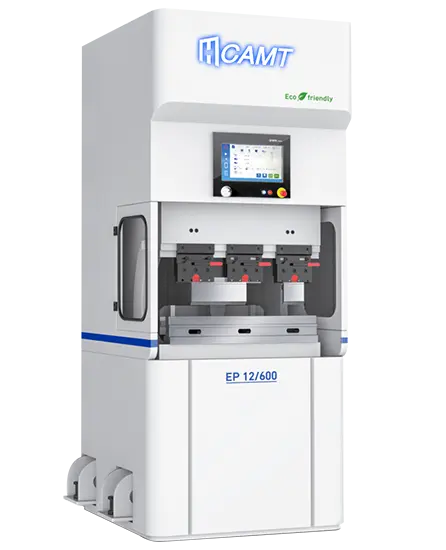
CAMT full-servo electric press brake uses servo motors under CNC control to drive the ram directly—no hydraulic oil needed. The system reads your programmed angles and lengths, then uses real-time sensor feedback to hold accuracy at ±0.005 mm, so even complex, high-precision parts stay consistent.
Compared with traditional hydraulic machines, it cuts energy use by roughly half while delivering about twice the output. The main drive efficiency stays above 95 % (versus under 80 % for hydraulics), and power is drawn only when the ram actually moves. Cycle times shrink thanks to rapid response, so daily part counts rise without extra shifts.
There is no oil to change, no leaks to clean, and almost no hydraulic parts to service—maintenance drops to simple lubrication. CNC programs switch from one job to the next in minutes, letting you handle mixed batches without long setup delays. The result is a cleaner workshop, lower running costs, and a machine that stays productive for years.
EPB Series Efficiency Servo Electric Press Brake Specification
| Parameter | Specification |
|---|---|
| Series | EPB Series – Full Servo Electric Press Brake |
| Drive System | VICHI Full Servo Motor & Drive (Direct-Connected) |
| CNC Control System | 21.6-inch Color HD Touch Screen, Linux Platform, 4-axis / 4+2 Axis Support |
| Programming Interface | One-Page Programming Navigation |
| Backgauge | CHTR Rear BGA 600 mm Stroke, Speed 300 mm/s |
| Y-Axis Rapid Feed Speed | 200 mm/s |
| Y-Axis Working Feed Speed | 30 mm/s |
| Repeat Positioning Accuracy | ±0.01 mm (up to ±0.005 mm) |
| Bending Angle Accuracy | ±0.5° |
| Main Servo Motor Speed | 4000 RPM with Absolute Encoder |
| Transmission Efficiency | > 95% |
| Linear Scale | Imported Italy GIVI Magnetic Measure |
| Ball Screw & Linear Guide | Taiwan HIWIN / TBI Precision |
| Standard Tooling | 2V Double CNC Die Series & 835 mm Punches |
| Lubrication System | Automatic Lubrication Oil System |
| Electrical Components | France Schneider Safety Electric System |
| Energy Consumption | Power drawn proportional to load; approx. 50% less than hydraulic machines |
| Key Advantages | No Hydraulic Oil, Zero Oil Pollution, Low Maintenance, High Speed & Precision |
Looking for more detailed specifications or a configuration that better matches your production needs? Contact our team to discuss additional parameters, customization options, or to receive a tailored quotation. We’re ready to help you find the right press brake solution.
Key Advantages of CAMT EPB Series Efficiency Servo Electric Press Brake
50% Energy Savings
Energy consumption is cut by approximately 50% compared with traditional hydraulic machines. Power is drawn only when the ram moves, and main transmission efficiency exceeds 95%.
Ultra-High Precision
Positioning accuracy reaches ±0.01 mm (up to ±0.005 mm) and bending angle accuracy stays within ±0.5°, delivering consistent results even on complex parts.
High-Speed Performance
Y-axis rapid speed reaches 200 mm/s and working speed 30 mm/s, significantly shortening cycle times and increasing daily output.
Virtually Maintenance-Free
Completely oil-free design eliminates oil changes, leaks and hydraulic component failures, reducing maintenance to simple periodic lubrication.
Direct-Drive Reliability
Direct-connected servo motor, reducer and lead screw structure removes the risk of belt breakage, lowers noise and improves long-term reliability.
Fast Job Changeover
21.6-inch one-page CNC interface supports 4-axis/4+2 axis control and allows rapid program changeover between different workpieces in minutes.
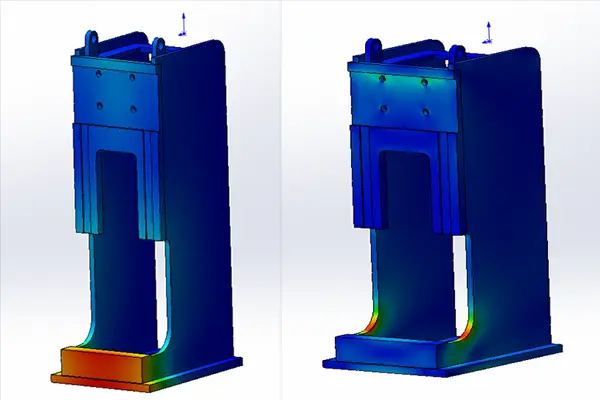
FEA & Stress Analysis of Small Press Brake
Stress Analysis & Finite Element Analysis
CAMT uses advanced 3D Finite Element Analysis (FEA) to verify the structural strength and long-term reliability of every EPB series press brake before production.
We carefully analyze the frame, bending arm and drive system under real working loads—including maximum bending force and motor torque. Material properties are precisely defined, and stress distribution, deformation and fatigue life are thoroughly evaluated.
The results confirm that the machine delivers high stiffness with minimal deflection, fully meeting safety and performance requirements. This rigorous simulation process helps us optimize the structure, reduce unnecessary material usage, and ensure the machine remains stable and accurate even after years of intensive operation.
In short, FEA gives customers greater confidence: every EPB press brake is engineered for durability, precision and lasting productivity.
Intergral Advanced CNC Control System
More Than 10 Years R&D CNC Control
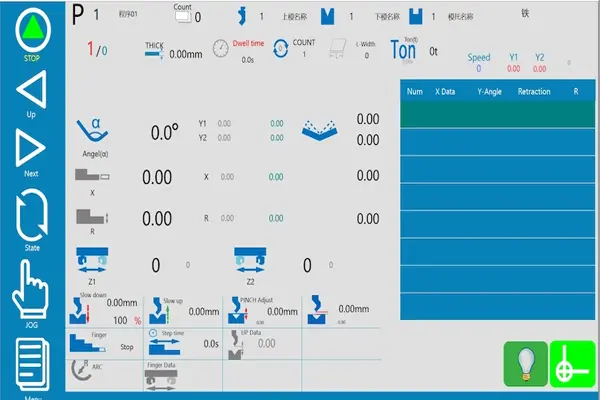
The EPB series is equipped with a 21.6-inch high-definition color touch screen that offers a clear and intuitive human-machine interface. Operators can complete all programming on a single page—viewing every parameter at a glance and adjusting curve data quickly without switching screens.
The control system supports full 4-axis operation and meets the highest requirements for 4+2 axis bending machines. Running on a stable Linux platform, it starts up rapidly and can be powered off directly without complex shutdown procedures.
Bending data is calculated automatically, and the speed of each step can be programmed freely.
Operators can precisely control slow-down and mid-stop points, while the home screen provides convenient functions such as quick mold alignment—allowing even first-time users to get started with ease. Rich communication interfaces also make it simple to connect the machine to an automated production line and use it as a flexible bending unit.
VICHI Servo Drive Theory
Servo Pure Press Brake Direcly Drive-Structure &Principle
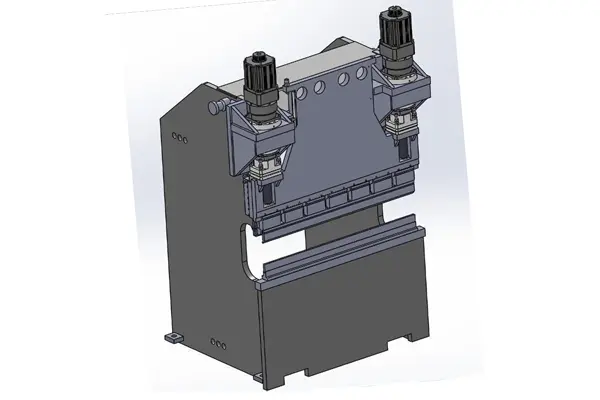
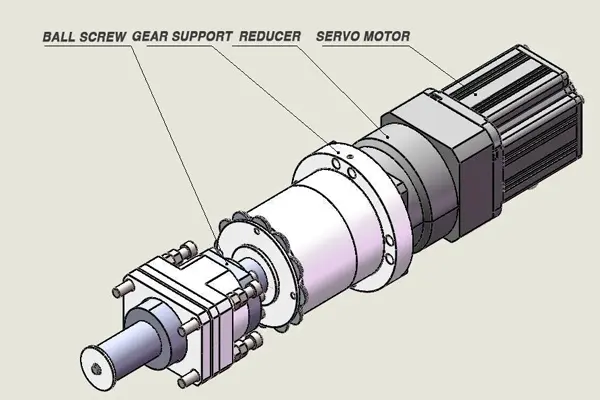
CAMT EPB series adopts a direct-drive design that connects the servo motor, reducer and heavy-duty lead screw as one streamlined unit—completely eliminating the traditional synchronous belt and pulley system.
Without the belt, the machine runs noticeably quieter and removes the risk of belt breakage that can cause uncontrolled slider movement. Positioning becomes more consistent, the structure stays simple and reliable, and long-term maintenance costs are reduced.
In operation, the servo motor drives the lead screw directly. The rotating screw moves the nut up and down, which in turn drives the ram and upper tool with high precision. This short, rigid transmission path delivers faster response, higher accuracy and greater reliability, while keeping the overall design compact and cost-effective—making the EPB series a practical choice for modern sheet metal workshops.
Direct-Connected Main Motor, Reducer, and Lead Screw
Direct-Connect Design
Compared with traditional synchronous belt systems, the direct-connected design of the EPB series is simpler to assemble and far more reliable in daily use. By removing the belt entirely, it eliminates the risk of belt breakage that could cause uncontrolled slider movement or braking problems.
The machine runs significantly quieter during operation. Superior positioning accuracy is achieved without the need for an extra magnetic scale for closed-loop control, which helps keep costs down. The design also counteracts the slider’s gravity, so a separate brake motor is no longer required—further reducing system complexity and expense.
The main servo motor runs at 4000 RPM for faster response, and its absolute encoder means the machine does not need to search for the zero position every time it starts up. The result is quicker readiness, higher reliability and lower long-term ownership costs.
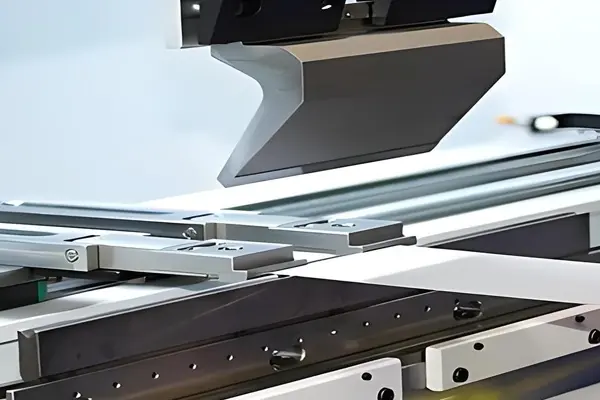
Pure Electric Press Brake Following Major Advantages
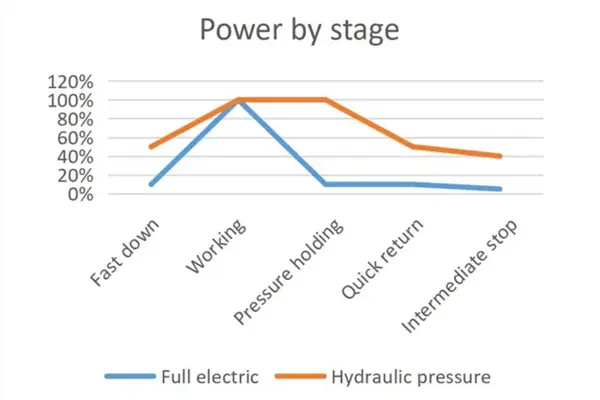
The EPB series consumes power only in proportion to the actual load. When the slider is idle, energy use drops to a minimum—unlike hydraulic machines that keep drawing power continuously. Main transmission efficiency stays above 95%, while traditional hydraulic systems typically operate below 80% and lose efficiency further as components age and wear.
By completely eliminating hydraulic oil, the machine removes the need for regular oil changes, leak cleanup and hydraulic component maintenance. This not only lowers operating costs but also avoids waste-oil disposal and environmental pollution. Combined with higher slider speeds and greater productivity, the result is a cleaner and more sustainable workshop.
Bending speeds can be freely adjusted according to material thickness, type and length, delivering angle accuracy within ±0.5°—noticeably tighter than the ±1° typical of hydraulic machines. The direct-drive system provides precise transmission without the need for expensive closed-loop feedback devices.
Compared with hydraulic press brakes that require frequent oil changes and are prone to pump, valve and seal failures, the pure-electric design uses a simple mechanical transmission that needs only periodic lubrication. Daily maintenance is greatly reduced, keeping the machine available and productive for longer.
Exceptionally Energy-Saving and Eco-Friendly
The EPB all-electric servo press brake works much like an inverter air conditioner: it automatically adjusts power output according to real working conditions, using energy only when needed and delivering significant savings compared with traditional hydraulic machines.
With no hydraulic oil required, there is no need for regular oil changes or disposal of waste oil. This keeps the workshop cleaner and completely avoids oil-related environmental pollution.
Related Products
FAQs When Purchase EPB Series Efficiency Servo Electric Press Brake
How much energy can this machine really save compared with a traditional hydraulic press brake?
What level of precision can the machine achieve? Is it suitable for high-accuracy parts?
How much faster is it than a hydraulic press brake in actual production?
What about maintenance costs? Does it need frequent servicing?
Is the machine noisy? Will it affect the workshop environment?
Is the machine easy to operate? Can new operators learn it quickly?
Can it be connected to an automated production line?
Is the structure reliable? Is there any risk of belt breakage or uncontrolled movement?
How does the total cost of ownership compare with a hydraulic press brake?
What about after-sales service and technical support?
Have more questions, or need a customized Press Brake solution?
Contact our team for detailed advice, technical support, or a tailored quotation. We’re ready to help you find the right configuration for your production needs.